Introduction
Web and mobile applications are the interface between businesses and users. Today’s apps must not only work — they must be fast, intuitive, and secure. As digital expectations rise, developers use modern frameworks, AI tools, and cloud-native architectures to deliver seamless user experiences. The line between web apps and native mobile apps is blurring, creating a unified digital presence for brands.
The Renaissance of User Experience
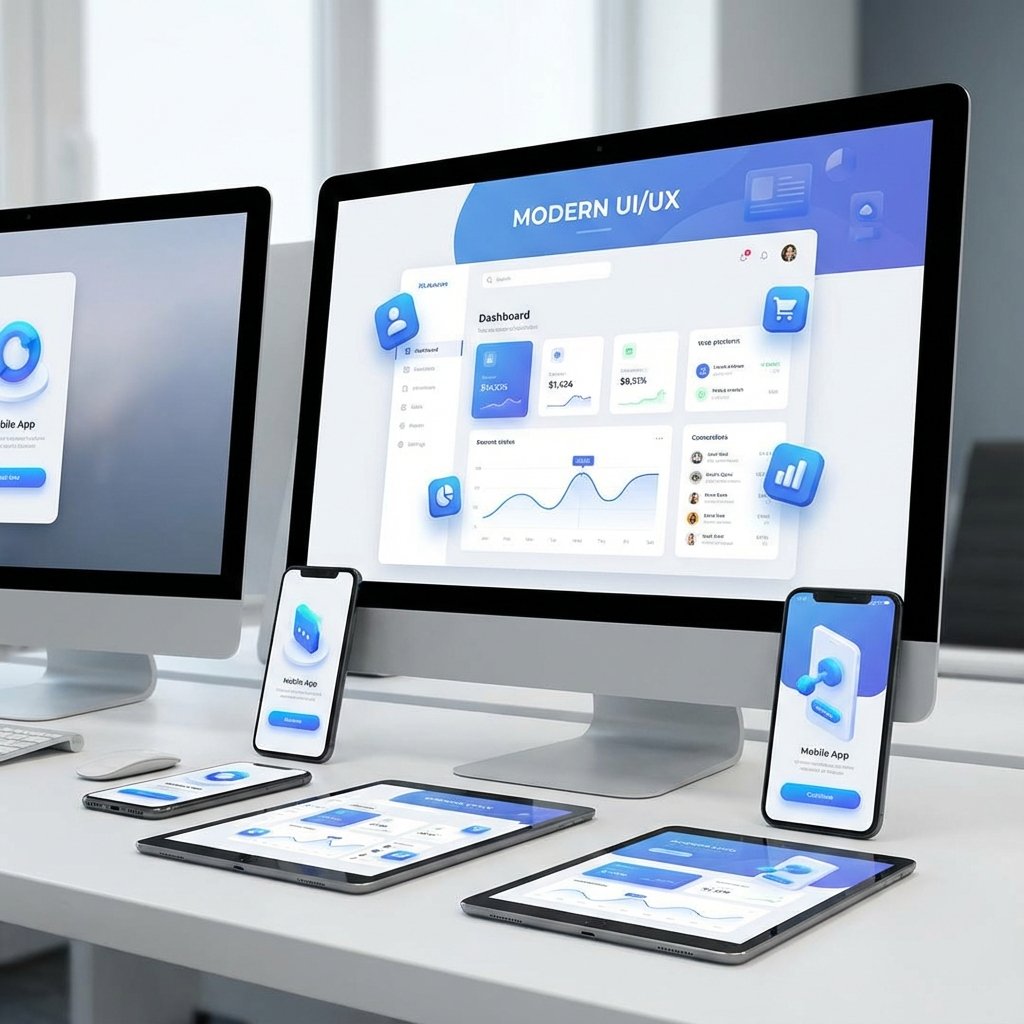
Modern development is moving beyond simple functionality. We are entering an era of 'Hyper-Personalization' where apps adapt their UI and content based on user behavior in real-time. Micros-animations, glassmorphic designs, and ultra-fast transitions are no longer 'nice-to-haves'—they are essential for retaining user attention in a crowded market.
Emerging Development Trends
AI-Assisted Development Tools
Tools like GitHub Copilot and chat-driven code assistants streamline coding, debugging, and even testing. This allows developers to focus on high-level architecture and creative problem-solving rather than boilerplate code.
Progressive Web Apps (PWAs)
PWAs combine web reach with mobile-app-like experiences without installation friction. Features like offline access and push notifications make them a cost-effective alternative to native apps for many businesses.
Low-Code & No-Code Integration
These platforms democratize app building, allowing business teams to prototype and deploy quickly. However, the most robust systems still rely on 'Pro-Code' custom engineering for scalability and security.
Cross-Platform Frameworks
Solutions like React Native and Flutter reduce development time while ensuring native-like performance. Shared codebases across iOS, Android, and Web enable faster shipping cycles and consistent brand experiences.
Best Practices for Development
Conclusion
The future of web and mobile apps lies in responsive, intelligent, and adaptive software that anticipates needs rather than simply responding to them — powered by modern frameworks, AI-enhanced tooling, and user-centric design. QuentroNova builds applications that feel like magic and perform like engines.